Westmeath is a county that’s full of quiet surprises. Situated in Ireland’s Hidden Heartlands, its landscape is a moodily beautiful blend of mossy woodland, undulating green fields and glimmering navy-blue lakes, some of which are perfect for gentle swims. With its go-slow roads and soft watercolour tones, it’s a calm, unhurried place – but beneath the stillness lie layers of history, myth and intrigue. Scratch the surface here and you’ll discover stories of Viking attacks, island-dwelling hermits and pioneering saints.
A swim in the cool and refreshing waters of Lough Owel came at the end of my trip to Westmeath, but I had started it several days before in the village of
Tyrrellspass, a place that perfectly embodies the county’s blend of history and nature. This Georgian-era village boasts an attractive green edged by a row of 18
th-century houses, as well as a hefty 13
th-century
tower house – now a restaurant – that looms over the main road. I had come here, not for the history, but for some well-needed immersion in nature. Tyrrellspass is home to one of the few remaining raised bogs in the midlands, and the
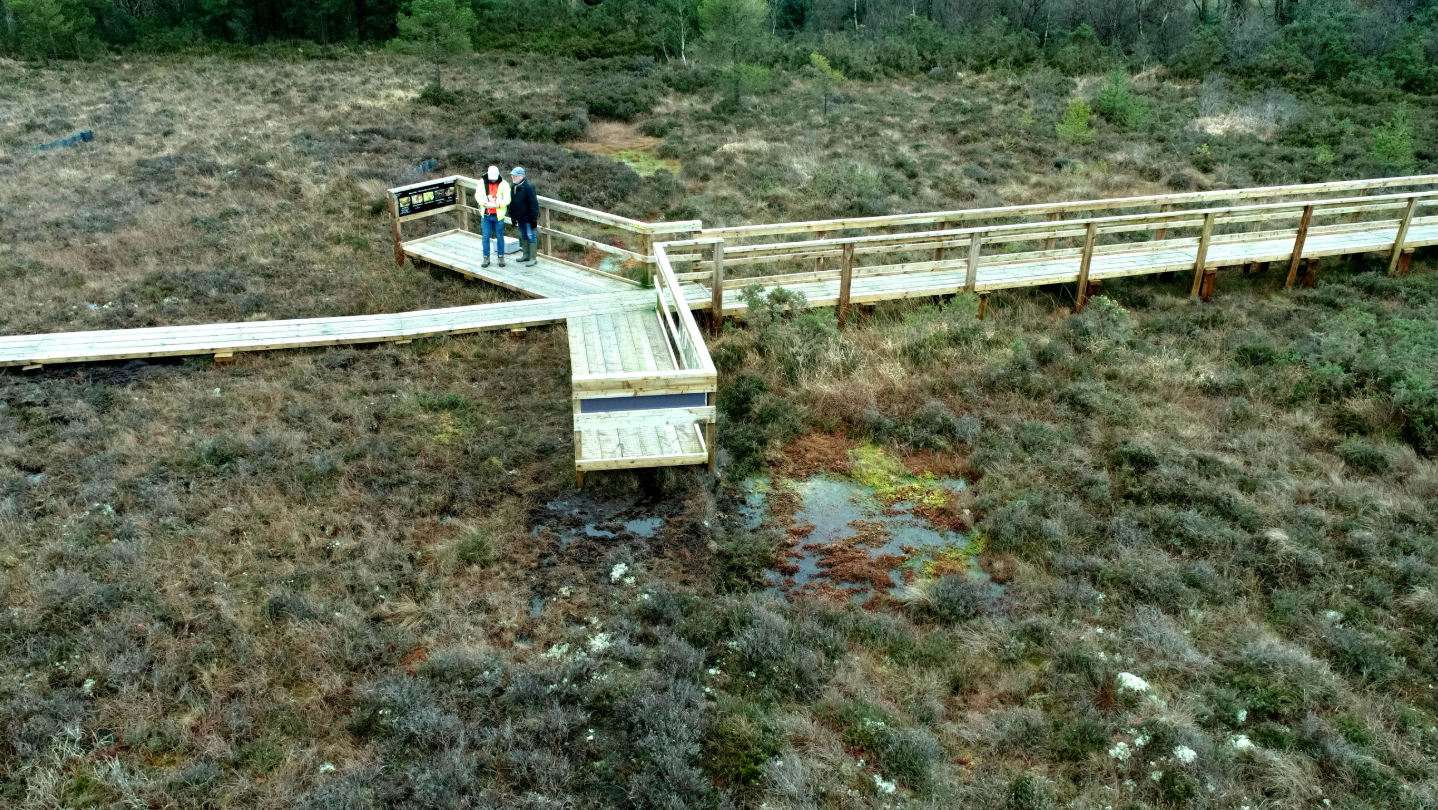
Cloncrow Bog and Village Trail brings you through this unique peatland habitat on an easy-to-manage 3.5km loop. Beginning along a leafy boreen, the trail continues into a timber boardwalk that hovers above a spongey landscape of sphagnum moss, bog cotton and heather, which shimmers with dew-dusted spider webs. For those not familiar with the rich biodiversity of Ireland’s boglands, it’s a fascinating experience, which is made all the richer thanks to an abundance of markers and information points along the way.
Westmeath has become something of a hidden gem for walkers over the last few years and there are lots of short options for the budding adventurer. Just north of Athlone, near the picturesque village of Glasson, lies
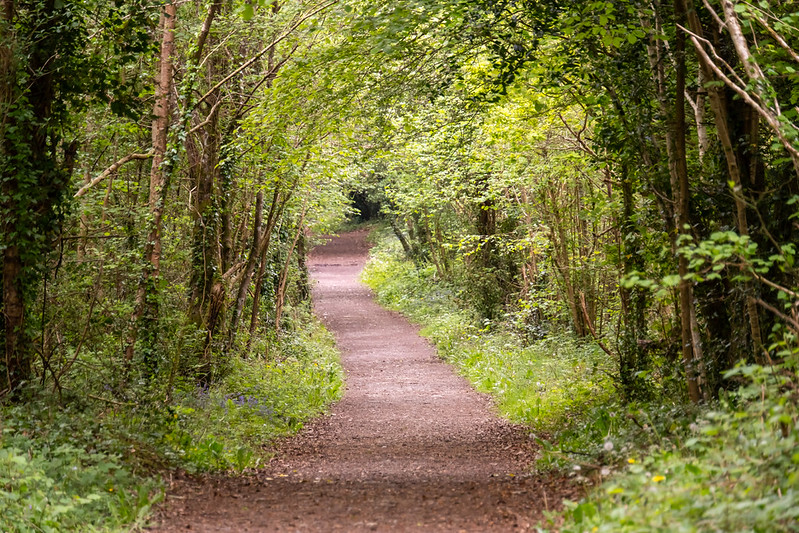
Portlick Millennium Forest, a wooded area nestled amongst the farmlands of Portlick and the Whinning Peninsula of Lough Ree. Here, silence is broken only by the flap of a swan wing or the call of a coot. The tapestry of broadleaf woodland – oak, ash, hazel – is swathed with ferns and dotted with moss-covered stones. Walking here, you’ll discover points along the trails where the trees part to reveal views of Lough Ree – little moments where you can wander to the shore to gaze at its shifting waters.
For a landscape dominated by water, surprisingly, many walks in Westmeath are more forest-based. Sitting enjoying a pint in the warmth of Sean’s Bar, Ireland’s oldest pub, one evening, I strike up a conversation with a local man who recommends trying the
Tudenham Park Trail. “You get great views of Lough Ennell there,” he told me, “And you’ll often have the place to yourself, especially on a weekday. It’s a nice quiet spot”. He’s not wrong. When I explore it the following day, I’m completely alone as I stroll along the picturesque shoreline of Lough Ennell and into the deep green forest.
 Getting out on the water
It’d be easy to come to Westmeath just to walk – spending days exploring the glorious woodland paths at
Belvedere House or the 1,000-acre broadleaved forest at
Mullaghmeen, but I’m keen to get out on the water. As well as an abundance of lakes, the River Shannon flows along the border of Westmeath, most notably passing through the town of Athlone, where it rises precariously high from time to time, flooding wetlands called the Callows, and, on occasion, spilling over into the town itself.
The Vikings once travelled this river, heading downstream to plunder the monastic riches at Clonmacnoise in County Offaly. Today,
Viking Tours Ireland runs guided tours with commentary along the same route, and their cheerful replica Viking boat, which is moored in front of
Athlone Castle, has become something of a landmark in its own right. While I’m tempted to hop on board and follow the historic path downriver, I’m equally drawn to discovering Lough Ree so I opt for a more bespoke on-the-water experience with
Hidden Heartlands Tours. At the helm is Pearse Connell, a seasoned local who has been navigating these waters for years. “My mother and father had a boat, a small houseboat, and we grew up here on the river,” Pearse tells me as we set off under a pale sky, skimming through the water in the direction of Lough Ree. “I’m privileged to have the job. Every day is different and it’s lovely.”
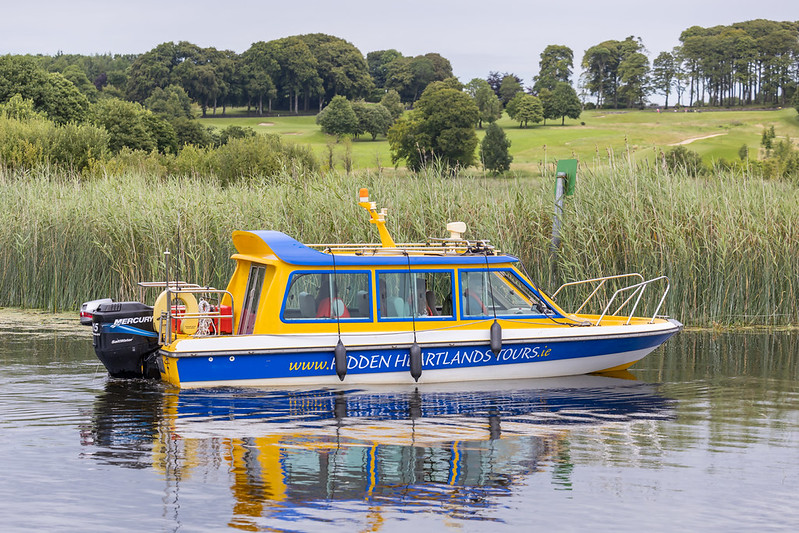
Lough Ree is the second-largest lake on the Shannon and forms a border between Longford, Westmeath and Roscommon. Sprawling and elemental, it’s a place steeped in myth and dotted with tree-tufted islands. It’s all about nature here, and as we glide along, I sit back and relax into the scenery – enjoying the sage green rushes, silver-flecked waves and occasional islands. One of these, Hare Island, is the third biggest on Lough Ree, and Pearse explains that in the 19
th century, it was used by Lord Castlemaine as a summer retreat. Soon, we get to a small marina called Coosan Point and glide along a narrow channel, where the water is shallow and remarkably clear, and into another lake called Coosan Lough, where Pearse offers guests the chance to enjoy a dip in the pristine waters. “People come here for the beauty and the tranquillity of the place,” Pearse explains. “They come to take a chill pill for a few hours and relax.”
Seeing the landscape from the water certainly offers a different perspective. As we continue on, we pass
Wineport Lodge on the lake’s edge and chug gently towards
Glasson Lakehouse. These are two of the area’s top places to stay, and for guests based there, Pearse offers a taxi service into town for pints at
Sean’s Bar or dinner at one of Athlone’s great restaurants. It’s hard to think of a more charming way to start a night out.
.jpg.aspx "seans-(1).jpg") A cycling adventure
A cycling adventure
Athlone may be a perfect jump-off point for trips up and down the Shannon, but it’s also a starting (or finishing) point for one of Westmeath’s best off-road walking and cycling routes – the
Old Rail Trail. This 43km Greenway along the old Midlands Great Western Railway between Athlone and Mullingar has become a popular recreational destination since opening a decade ago. The route starts right in the middle of Athlone town, but as I’ve spent the morning walking in Belvedere House and Gardens, I decide to opt for a section of the trail out of Mullingar. It’s a distance of around 16km from Mullingar to Streamstown, and I reckon that on the electric bike that I’ve hired from
Mullingar Bike Hire, it’ll be enjoyable and not too challenging.
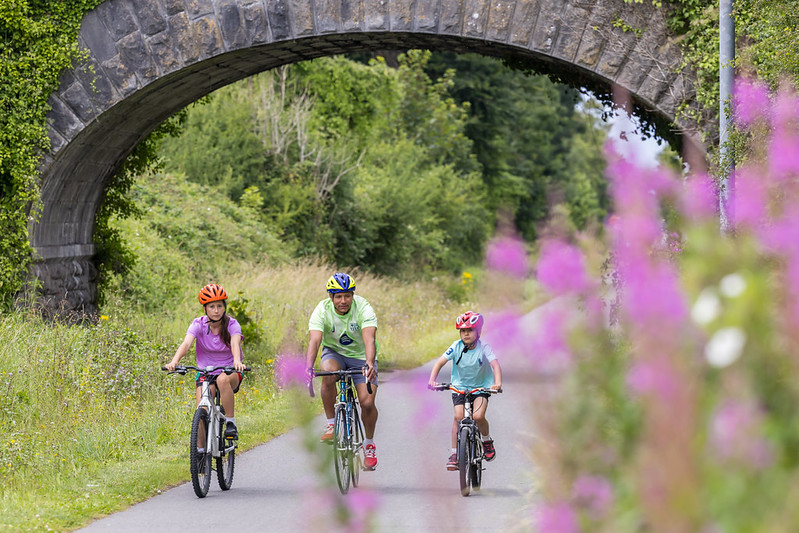
And I’m right. Armed with a small backpack with water, sunglasses, a raincoat and some sun cream, I set off along a waterside trail past fishermen casting lines, children playing and friendly dog walkers who wave as I pass. It’s not long until this track meets with the Old Rail Trail proper, and I’m surprised at how quiet the route is. It’s a total delight cycling along here, with an abundance of wildflowers, butterflies and glimpses of the old railway track. Handily, there are markers along the way so you can clock your distance as you go, but there’s a sense too that there’s no rush as you cycle under stone bridges and past the historic Castletown Station.
By the time I reach Streamstown, I’m ready for a break, and the little trail-edge café of
Jack’s Stop in an old train station is the perfect place to pause. Bathed in sunshine, I sit outside. Around me, locals chat, bees buzz, and wildflowers sway in the wind. There’s a pot of tea on the table, an occasional cyclist passes by, and the mood is calm – it’s a small moment, but one that somehow captures the essence of Westmeath – unhurried, relaxed and quietly beautiful. I’ll be back.
Need to know – the lowdown on outdoor adventure in Westmeath
Swimming: It is advised to swim in the designated bathing areas in Westmeath. This includes The Cut at Lough Lene, Portnashangan at Lough Owel, and Lilliput at Lough Ennell.
On the water: Viking Tours Ireland operates trips on a replica Viking ship to Clonmacnoise and daily to Lough Ree. Both
Hidden Heartland Tours and
Barracuda Boat Trips operate a river taxi service on Lough Ree and the Shannon, as well as cruises. For angling, try
Brick Island Angling, and for a boat trip with a difference, the
Hot Tub Boat is the way to go.
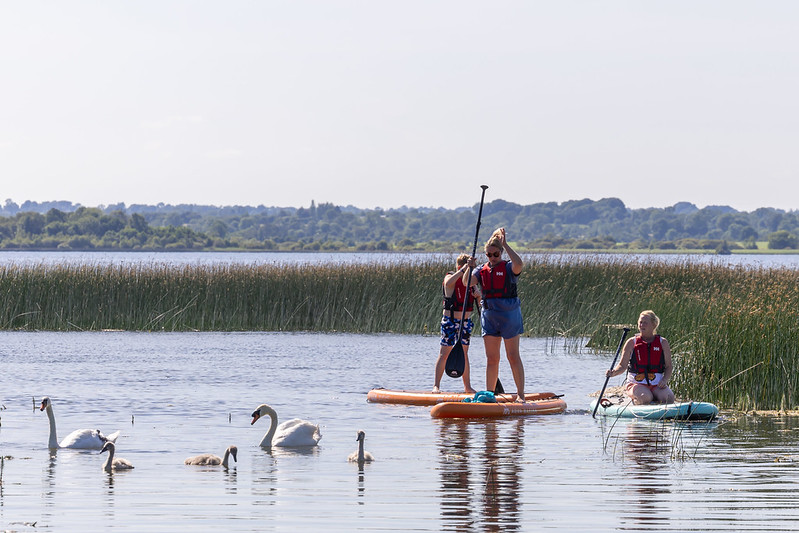
You can try watersports, including kayaking and SUP, at
Lilliput Adventure Centre,
Derrymore Springs and
SUPWell Ireland. If you want to go under your own steam, try hiring a boat at Lilliput.
Walking in Westmeath: As well as the walks mentioned, there are trails at
Dún na Sí and
Milltownpass Bog. In Athlone, try the
Shannon Banks Walk & Nature Trail, or head into history with
St Feichin’s Way at Fore.
Cycling: Both the
Old Rail Trail Greenway and the
Royal Canal Greenway offer good long-distance cycling options in Westmeath. Bicycle hire is available at
Mullingar Bike Hire, OE Bikes and via advance booking with Ethical Tours and Ballymahon Bike Hire.